

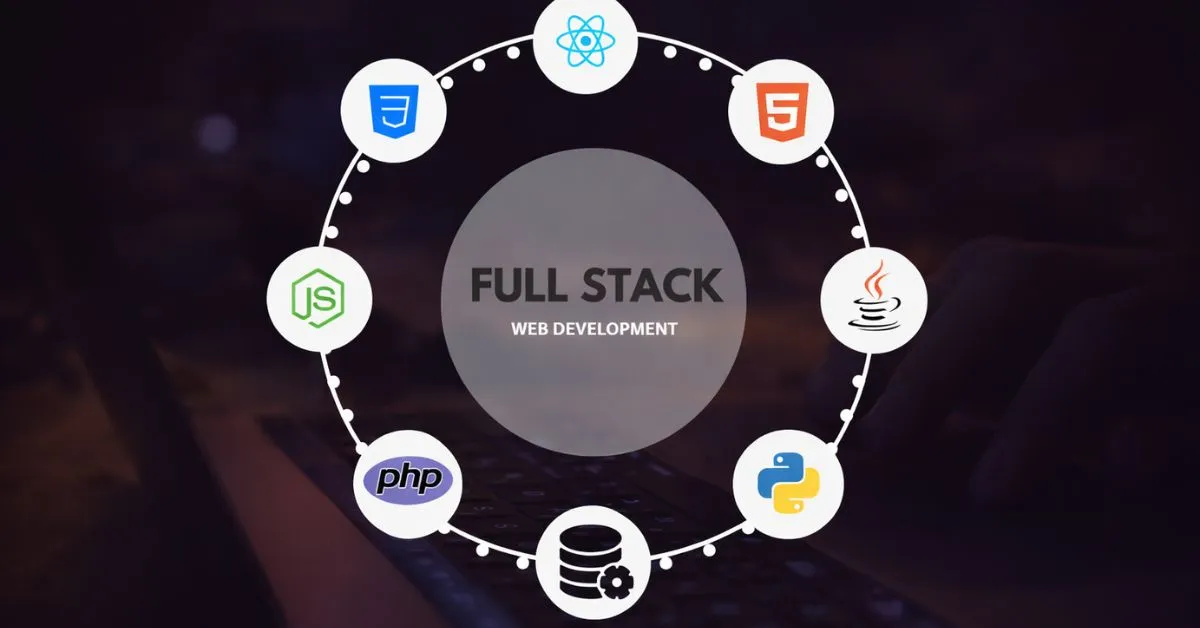
Technology is growing rapidly, and web development has become one of the most in-demand career options in 2026. Every business today needs a website or web application to reach customers and provide services online. Because of this, the demand for full stack developers is increasing continuously.
A full-stack developer has the ability to work on both frontend and backend development of a web application. They can build complete applications because they have the ability to create user interfaces and develop server-side logic. The field presents a confusing entry point for beginners because so many technologies exist within it.
This is where a proper full stack developer roadmap becomes important. The program offers a complete learning path which teaches students what content to study, the order of their studies, and the methods to develop their practical abilities.
In this guide, you will understand the complete roadmap, required skills, tools, and career path in a structured and simple way.
What is a Full Stack Developer?
A full-stack developer builds complete web applications by developing both client-side and server-side components. The system’s complete operation exists as their knowledge base, which they use to implement their work across multiple domains.
The team needs to create user interfaces while they must also handling database systems and developing server operations to guarantee that applications function properly on multiple devices.
A full-stack developer typically works with:
- html css and javascript to design the user interface
- Backend programming languages
- database management systems
- APIs and frameworks
- version control tools
This combination of skills allows them to handle complete web development projects efficiently.
Full Stack Developer Roadmap 2026 Step-by-Step Guide
The journey starts with finding a structured learning path to help you become an extraordinary developer with this full-stack developer roadmap beneath, which breaks down every step to be embraced by beginners.
1. Learn the basics of Web Development
Before proceeding to advanced material, beginners must first master the essential web development skills. The fundamental skills serve as the essential base which enables all subsequent educational progress.
Start by learning how websites work, how browsers render pages, and how client-server communication happens.
Focus on:
- Understanding how the internet works
- Basics of HTTP and HTTPS
- Introduction to frontend and backend development
- How web applications function
- This step helps build clarity before diving into coding.
2. Learn HTML, CSS and JavaScript
HTML tags, together with forms and semantic elements, establish the fundamental framework of a website because they determine the methods used to display content in web browsers. Developers can create visually appealing responsive layouts through CSS layout techniques, which include flexbox and grid, because these methods help them to accurately position elements during the development of modern user interfaces. In addition to this, responsive design ensures that websites adapt smoothly to different screen sizes and devices, providing a consistent experience across mobiles, tablets, and desktops.
3. Understand Responsive Design
Websites need a responsive design because it enables them to provide customers with the same browsing experience across all screen sizes and device types. Developers use media queries to determine different styling options which depend on the user’s screen width, screen height and the type of device being used. Flexible layouts enable content to resize automatically through the use of percentage-based measurements and fluid grid systems instead of static dimensions. The mobile-first design process begins with creating designs for the smallest screens. These designs then lead to the development of designs for bigger devices, which improve both performance and user experience.
4. Learn Frontend Frameworks
People should start learning frontend frameworks after they master JavaScript. The tools enable developers to create user interfaces that perform at high speed and handle large user volumes.
Developers are able to build any project by choosing AngularJS to make their development effort perceivably more productive.
Focus on:
- Component-based architecture
- State management
- Reusable UI components
- Handling API data
One must always know about the frontend frameworks if one is to develop a modern application.
5. Learn Backend Development
Backend development requires knowledge of server architecture and data processing methods, which connect servers to databases. The field requires developers to learn backend programming languages while they build APIs, which enable systems to communicate with each other, and they implement authentication methods which protect user data.
6. Learn Database Management
Database management requires knowledge of various database systems, which include both relational databases and non-relational databases, together with the ability to create queries that enable efficient data storage and retrieval operations. The process involves two main tasks, which require data relationship management to achieve accurate and consistent results, while security measures protect sensitive information and guarantee secure data operations.
7. Learn Version Control Systems
Version control involves creating repositories to organize code and tracking updates through committed changes and developing features through branch management, while team members work together to keep the codebase clean and consistent.
Full Stack Developer Roadmap Skills Table
| Skill Area | Description | Importance |
| full stack developer roadmap | Complete learning path for beginners | Essential |
| html css and javascript | Core frontend technologies | High |
| frontend frameworks | Helps build modern UI | High |
| frontend and backend development | Core full stack concept | High |
| database management | Stores application data | High |
| version control | Manages code efficiently | Essential |
Tools and Technologies Use
Different tools are used in web development to improve productivity and workflow.
Common tools include:
- Code editors
- Browsers
- Debugging tools
- Package managers
- Deployment platforms
These tools help developers build and sustain applications competently.
Full Stack Developer vs Other Roles (Comparison Example)
| Role | Work Focus | Skills Required |
| Full Stack Developer | Works on complete applications | frontend and backend development |
| Frontend Developer | Focuses on UI | html css and javascript |
| Backend Developer | Server-side logic | database management |
Advantages of Following a Full Stack Roadmap
A full stack developer roadmap with structure is extremely beneficial.
- Clear learning path
- Better understanding of web development
- Faster skill growth
- Ability to build real projects
- High job demand
Challenges Beginners May Face
Learning full stack development has some challenges.
- Too many technologies
- Understanding backend logic
- Managing frontend and backend development
- Lack of practice
Consistency is the key to overcoming these challenges.
Career Opportunities in 2026
The demand for professionals in web development is rapidly increasing.
Career options include:
- Web developer
- Software engineer
- Application developer
- Technical lead
- Freelancer
Pros and Cons
Pros
- High demand
- Strong career growth
- Freelancing opportunities
- Full control over development
Cons
- Continuous learning required
- Complex technologies
- Time-consuming for beginners
Conclusion
A structured full stack developer roadmap makes learning easier and more effective. The proper path leads to better learning results because it helps students develop essential skills for both frontend and backend development.
The html, css, and JS became important topics to realize competency in web development.In 2026, full stack development is one of the best career choices. With the right strategy, consistent practice, and real-world projects, anyone can build a successful future in this field.
FAQs
1. What is a full stack developer roadmap?
The full stack developer roadmap is a step-by-step guide to learn frontend and backend development and become a professional developer.
2. What skills are required?
You need HTML, CSS, and javascript, frontend frameworks, database management, and version control skills.
3. Is full stack development good for beginners?
Yes, it is beginner-friendly if you follow a proper full stack developer roadmap.
4. How long does it take?
It takes around 6–12 months, depending on practice and consistency.
5. What tools are used?
Tools include code editors, Git for version control, and deployment platforms.
6. Why is responsive design important?
Responsive design ensures websites work smoothly on all devices.