

The demand for skilled web professionals continues to rise as digital platforms become central to businesses, education, healthcare, and e‑commerce. When entering development, one of the most common questions is frontend vs backend development – which path is more difficult, higher paying, and better for long-term career growth?, salary potential, and long‑term career stability?
A web application today is no longer a simple website. It is a complex system where visual interfaces and server-side logic work together. Choosing between frontend and backend development depends on interests, problem-solving style, and career goals. This guide explores skills, salary expectations, and career scope in 2026 to help learners make an informed decision.
Understanding Frontend and Backend Development
Frontend and backend development represent two essential layers of any digital product. While they are interconnected, each role focuses on a distinct responsibility within a web application ecosystem.
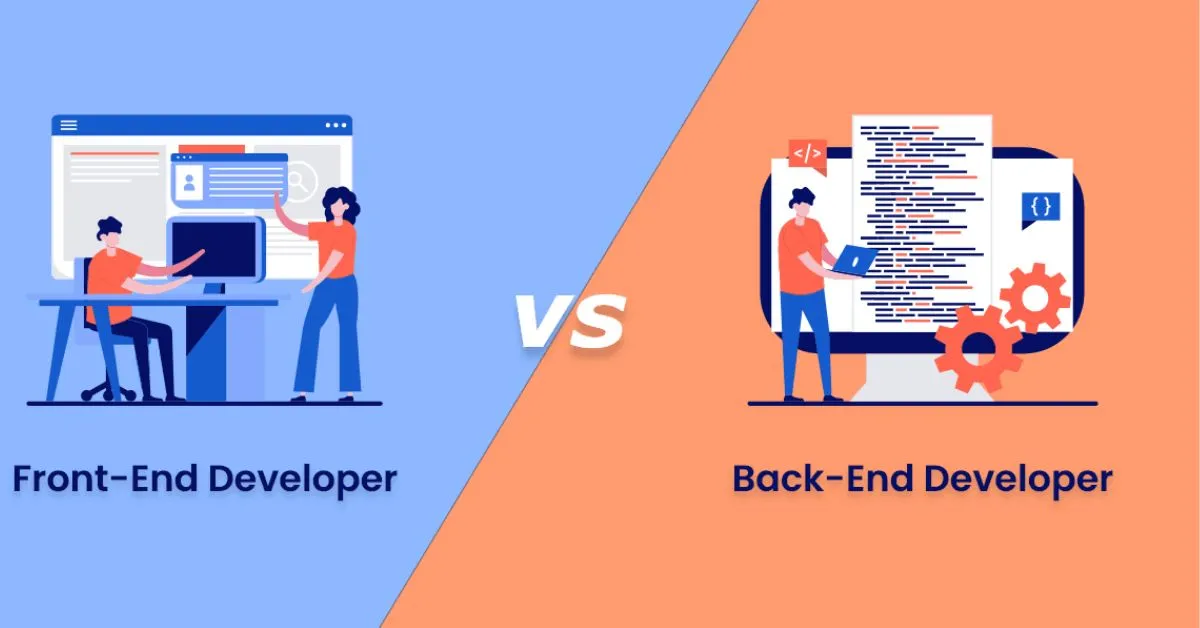
Frontend development deals with everything users see and interact with directly. Backend development, on the other hand, manages data processing, storage, and system logic behind the scenes. The frontend vs backend comparison is not about superiority but about specialization.
Modern platforms rely on both layers equally, making collaboration between developers critical for performance, usability, and security.
What Does a Frontend Developer Do?
A frontend developer focuses on creating visually engaging, responsive, and user-friendly interfaces. Their primary goal is to ensure that users can interact with a application smoothly across devices and browsers.
Frontend work blends creativity with logic. It requires understanding design principles while also applying technical implementation.
Key responsibilities often include:
- Translating design concepts into functional layouts
- Ensuring responsive behavior across screen sizes
- Optimizing interface performance and loading speed
- Maintaining accessibility and usability standards
Strong developer skills in frontend roles help bridge the gap between design intent and technical execution.
What Does a Backend Developer Do?
Backend developers handle the core functionality that users do not see directly. They work on servers, databases, and application logic that power a web application.
Their work ensures that data flows securely and efficiently between systems. Unlike frontend roles, backend tasks focus more on performance, scalability, and security.
Common backend responsibilities include:
- Managing databases and data structures
- Building secure authentication systems
- Handling server-side logic and APIs
- Ensuring system reliability and scalability
Experienced backend developers play a crucial role in maintaining the stability of complex platforms.
Frontend vs Backend: Key Skill Differences
The frontend vs backend distinction becomes clearer when comparing required skills. Both roles demand technical expertise, but the focus areas differ significantly.
Core Frontend Skills
- Strong understanding of UI/UX principles
- Proficiency in programming languages used for interfaces
- Knowledge of browser behavior and responsiveness
- Ability to debug visual and interaction issues
Core Backend Skills
- Deep understanding of server architecture
- Expertise in databases and system design
- Experience with security and performance optimization
- Strong logical and analytical thinking
While frontend emphasizes user experience, backend prioritizes system efficiency and reliability.
Salary Comparison: Frontend vs Backend in 2026
Salary expectations vary based on location, experience, and skill depth. However, trends indicate steady growth for both roles due to increased demand for scalable digital solutions.
Average Salary Range (2026)
| Role | Entry-Level | Mid-Level | Senior-Level |
| Frontend Developer | Moderate | Competitive | High |
| Backend Developer | Competitive | High | Very High |
The frontend vs backend salary gap often narrows at senior levels, where experience and system knowledge matter more than specialization.
Frontend vs Backend Difficulty in 2026
Frontend development may appear easier initially because of visual feedback and faster results. However, mastering advanced concepts like performance optimization, state management, and accessibility can become challenging.
Backend development typically has a steeper learning curve due to database architecture, server logic, scalability, and security management. It requires deeper analytical thinking and structured problem-solving.
In 2026, neither role is inherently harder. The difficulty depends on personal aptitude and learning style.
Career Scope and Growth Opportunities
Career growth depends on continuous learning and adaptability. Both frontend and backend roles offer multiple advancement paths in 2026.
Frontend professionals can progress toward:
- UI/UX architecture roles
- Performance optimization specialists
- Product-focused development roles
Backend professionals can move into:
- System architecture positions
- Security-focused development
- Infrastructure and scalability roles
Strong developer skills combined with experience open leadership opportunities in both paths.
Frontend vs Backend: Daily Work Environment
The day-to-day experience differs significantly between frontend and backend roles. Understanding daily tasks helps learners choose a path aligned with their working style.
Frontend developers often collaborate closely with designers and testers. Their workflow involves frequent visual testing and interface refinement.
Backend developers spend more time on logic, data flows, and performance testing. Their work requires deeper concentration and long-term system planning.
Programming Languages Used in 2026
Frontend Programming Languages & Tools
- HTML, CSS
- JavaScript
- React.js, Next.js, Vue.js
- Tailwind CSS, Bootstrap
Backend Programming Languages & Tools
- Node.js (JavaScript)
- Python (Django, Flask)
- Java (Spring Boot)
- PHP (Laravel)
- Databases: MySQL, PostgreSQL, MongoDB
Understanding these programming languages helps developers collaborate better—even when specializing in one role.
Which Role Is Better for Beginners?
Beginners often find frontend development more approachable due to immediate visual feedback. Seeing changes instantly can boost motivation during early learning stages.
Backend development may feel abstract at first but offers strong long-term stability for learners who enjoy logic and problem-solving.
Both paths require commitment, but choosing based on personal interest leads to better outcomes than following trends alone.
Frontend vs Backend Skill Comparison
| Aspect | Frontend Development | Backend Development |
| Focus Area | User Interface | System Logic |
| User Interaction | Direct | Indirect |
| Learning Curve | Moderate | Steep |
| Career Flexibility | High | Very High |
Importance of Full-Stack Awareness
Even when specializing, understanding both frontend and backend concepts is valuable. Collaboration improves when developers understand how decisions affect the entire web application.
Many professionals begin in one role and gradually expand their expertise. This hybrid understanding improves communication, debugging, and system design.
Full awareness strengthens long-term career resilience in a rapidly evolving tech landscape.
Industry Demand in 2026
As digital services expand, the need for skilled professionals continues to rise. Platforms require fast interfaces and reliable systems, increasing demand for both frontend and backend expertise.
Industries such as education, finance, healthcare, and e-commerce rely heavily on scalable web development.
This sustained demand ensures strong job stability for professionals with updated developer skills.
Choosing Between Frontend and Backend Development
The frontend vs backend choice should be based on personal strengths rather than salary alone. Creative thinkers may prefer interface-focused roles, while analytical minds may thrive in backend environments.
Key factors to consider:
- Interest in design vs logic
- Preferred working style
- Long-term learning goals
Both roles offer rewarding careers when aligned with individual aptitude.
Future Trends Shaping Developer Roles
In 2026, automation, performance optimization, and security awareness continue to reshape development roles. Frontend developers increasingly focus on performance and accessibility, while backend developers emphasize scalability and protection.
Continuous learning remains essential as programming languages and tools evolve rapidly.
Professionals who adapt to these trends maintain a competitive edge in the job market.
FAQs
1. What is the main difference in frontend vs backend roles?
The frontend vs backend difference lies in user-facing interfaces versus server-side logic and data handling.
2. Which role requires stronger programming languages knowledge?
Both roles require programming languages, but backend roles demand deeper system-level understanding.
3. Are backend developers in higher demand?
Yes, experienced backend developers are highly valued for scalability and security expertise.
4. Can one person learn both frontend and backend?
Yes, understanding both improves developer skills and career flexibility.
5. Which role is better for web application security?
Backend roles focus more on security within a web application environment.
Conclusion
Choosing between frontend vs backend development in 2026 is a career‑defining decision. Frontend emphasizes creativity and user experience, while backend focuses on logic, data, and performance.
Both roles offer excellent salaries, global opportunities, and long‑term growth. By aligning your interests with the right developer skills, you can build a successful and future‑proof career in the web application ecosystem.